

A landing technique for
• reduce the risk
• have more chance of making the target
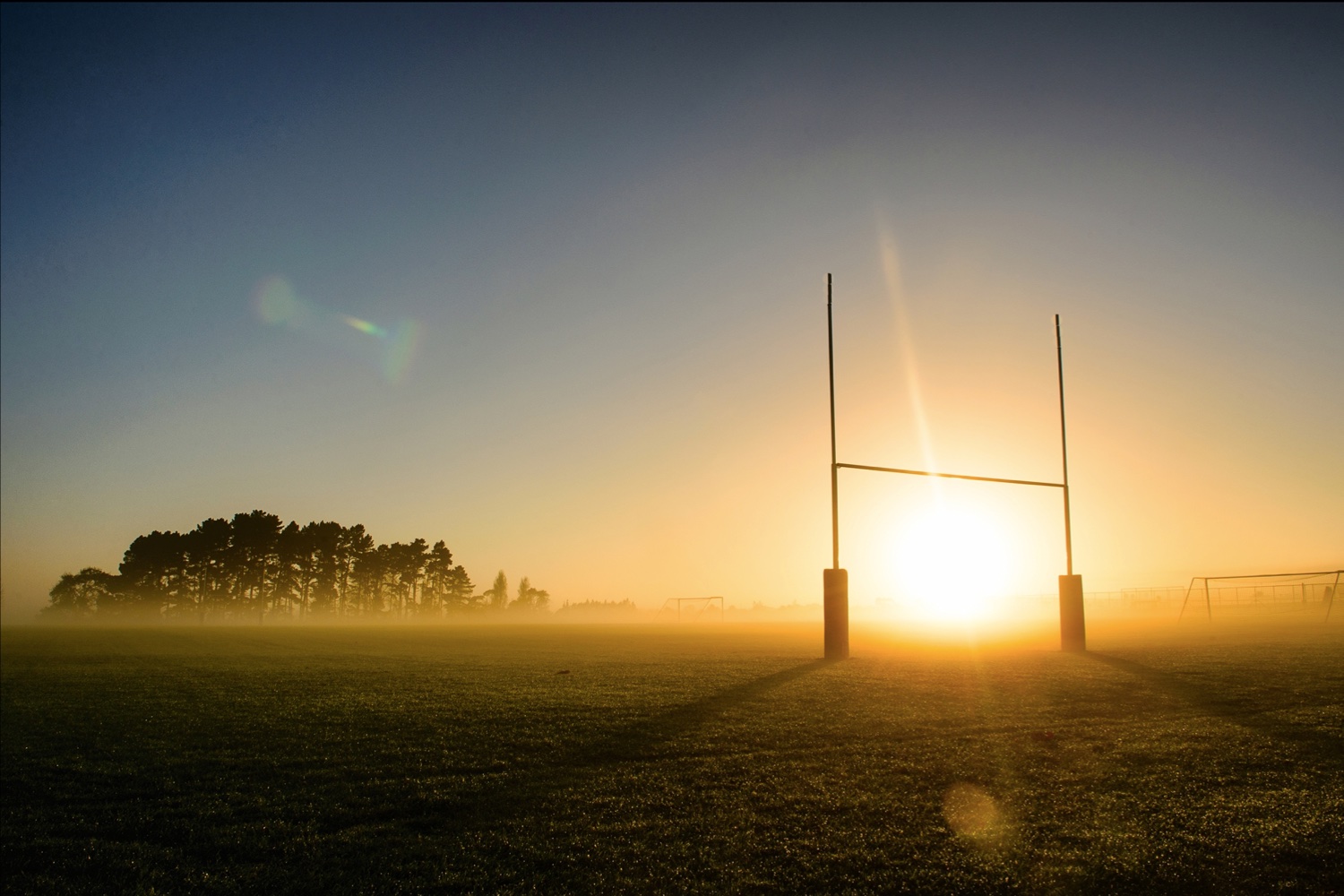
Mentally place a rugby goal close to the target.
The technique consists of making 360, turns, S… at an altitude where turbulence is low…
… to manage to pass
between the tops of the poles!
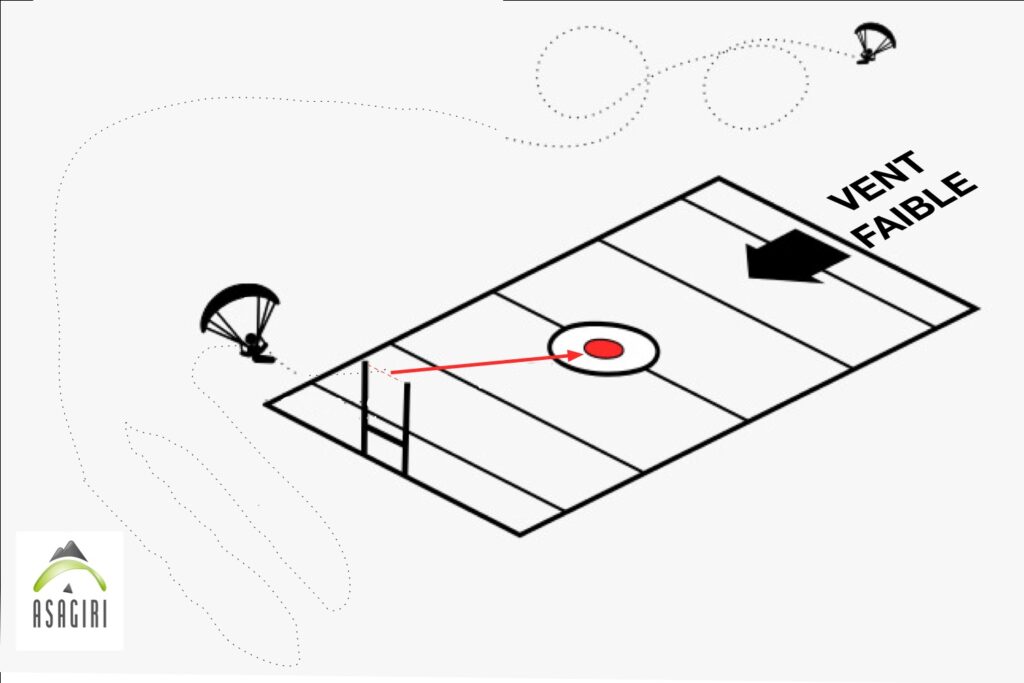
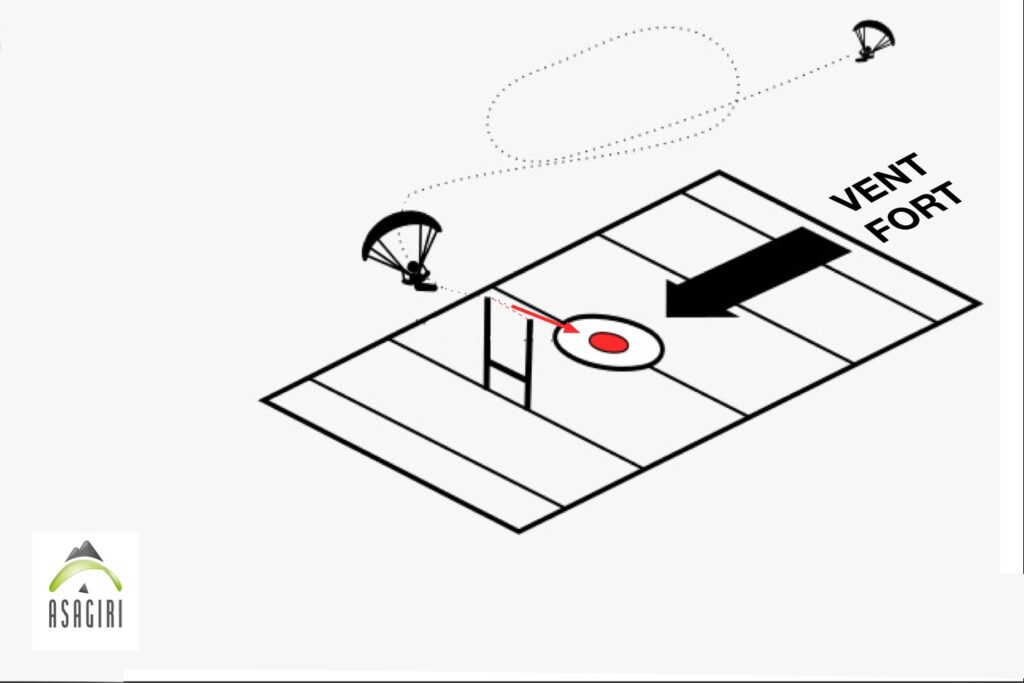
The rugby goal is placed
- quite far from the target when the wind is weak.
- close to the target when the wind is strong
Be careful not to let yourself drift by the wind!
In strong winds, the ground speed of the paraglider is greatly reduced.
It is preferable to stay on the windward side of the target to reduce its altitude.
The final phase (poles/target)
We are vulnerable near the ground: we must put all the chances on our side!
Straight flight to avoid collapses
Changes in incidence during turns near the ground can promote collapses caused by
- turbulence created by obstacles
- thermal triggers
- the pilot’s clumsiness!
High arms to avoid a stall
Speed brings safety to avoid a stall caused by the wind gradient.
ATTENTION : to avoid making the paraglider unstable
It is very bad to ” tighten the brakes a bit to feel the canopy ” !!!
This removes the reflex effect of our current magnificent paragliders.
I think it is also the cause of collapse that is a priori inexplicable, especially when approaching in the wind.
The video of Bruce Goldsmith and the translation + additions on this important subject by clicking on the button below.
Usual causes of stall near the ground:
The wind speed decreases near the ground to zero in the last cm of altitude.
If you are flying slowly close to the ground, a stall can occur when arriving in an air layer where the wind is sufficiently slowed down for the paraglider’s airspeed to be below that of the stall.
Thoughtless gestures caused by the stress of absolutely wanting to ‘make the target’ are added to the wind gradient and turbulence.
Agree to miss the target!
You will place your ‘rugby goal’ better next time!