


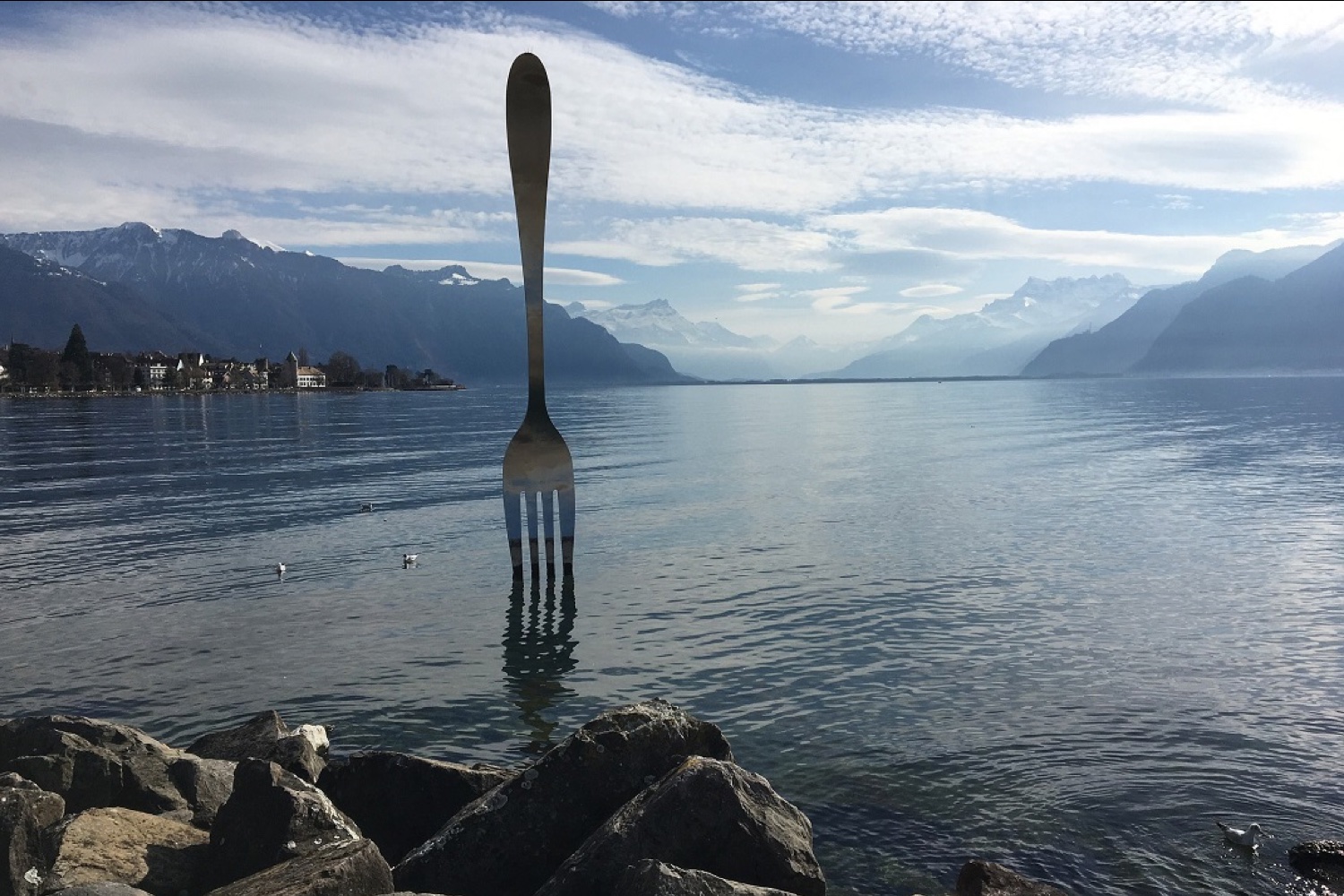
In French they say “fourchette de poids” (weight fork) = weight range.
The term “weight fork” refers to the weight range (take-off weight) for which a paraglider is certified.
This is shown in the technical data on the manufacturer’s website and on the label usually sewn to the front of one of the central ribs of the paraglider.
The given weight is the start weight.
This is the weight we do just before we take off with all our gear after the “fear pee”.
Compared to the bare weight, to calculate the take-off weight, you must add:
- 15 to 20 kg for standard equipment
- 10 to 15 kg for light equipment
- 5 to 10 kg for ultralight equipment
Obviously, it is better to avoid doubts and really weigh yourself with all your equipment.
Warning: you may well be surprised!
A paraglider is both approved for minimum weight and maximum weight!
During certification tests, when the weight range desired by the manufacturer is wide, the laboratory will carry out twice the complete battery of flight tests with a pilot at the very bottom of the range and with another at the very top.
Differences in behaviour
At the beginning of paragliding and about twenty years ago :
- The small overstressed size (20 kg above the max of the weight range) was very (too?) manageable, horribly unstable and violent in flight incidents.
- the large, very light-laden size (20 kg below the mini of the weight range) was slow, horribly lazy in turns and very calm in flight incidents.
With current paragliders, the differences are much smaller:
- the small, well-loaded size (20 kg above the max of the weight range) is slightly sharp in turns and in flight incidents.
- The large, very low-load size (20 kg below the mini of the weight range) has a good turn and a little more calm in flight incidents.
What about within the weight range?
The trend is the same as above, but to an even lower extent !
- at the top of the range (max weight!), it’s slightly brighter and a little faster (only 1 km/h)
- At the bottom of the range (at minimum weight), it is slightly quieter and the sink rate is a little better.
My opinion : it’s a lot of stories for not much!
During the same flight, I may, at some point, wish to be faster (at the top of the range) if there is a lot of wind. At another point, when I’m bottoming out and the lift is very low, I really want to have a better sink rate (at the bottom of the range).
So, I find the big discussions (being at the top or the bottom of the range) very futile.
Especially if you don’t have your glider’s trimming checked!
Beginner : what difference does it make?
When a relative beginner pilot hesitates between 2 sizes, I recommend the larger one, because it will be a little calmer. The small “lost” km/h is now easily regained with the speed bars, which are effective even in turbulent conditions.
However…
It is more pleasant to be in the middle of the range, because its weight and its equipment can vary over time and seasons in one direction or the other.
If you cannot find a size of your dream paraglider where you are close to the middle of the weight range,
choose another model !
Weight ranges differ from brand to brand.
Note : These considerations do not apply to paragliders (CCC & EN-D). Their demanding and delicate handling can require a precise wing load to achieve maximum efficiency.